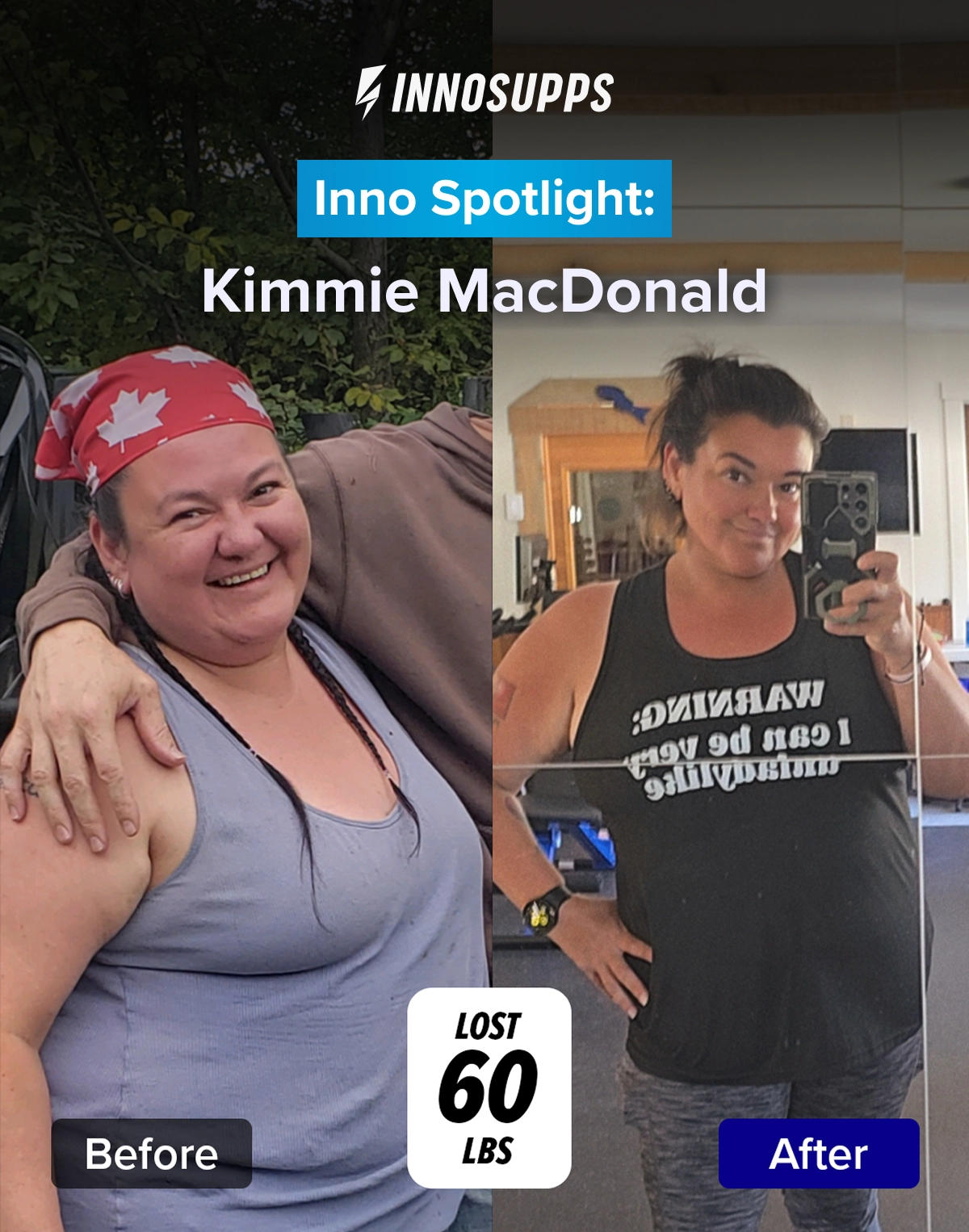
Fifteen months ago, I couldn’t stand to look at my own reflection.
Kimmie MacDonald was trapped in an active cycle of alcoholism, using drinking as an escape and as an excuse to fall asleep so I wouldn’t have to think. My digestion was wrecked, my energy was completely flat, and every attempt at weight loss was just a search for a quick fix. When I finally hit a breaking point after a heavy bender, I checked myself into a 64-day treatment program.
On day one, I attempted a walk on the facility’s trail. My asthma kicked in immediately, I was gasping for air, and I felt completely defeated by a single loop.
That walk was the start of an entirely new life.
One Lap at a Time
During treatment, we had 25-minute breaks throughout the day. Instead of sitting down, I forced myself back out onto that path. One lap turned into two. Two laps turned into three. My lungs began opening up, and the heavy fog in my head started to lift.
When I graduated from treatment, I was riding what people in recovery call the “pink cloud”—feeling hopeful, clear, and energized. But real life hit the very next morning. I had to pack up and move all my belongings out of the house I shared with my partner of 15 years. The relationship had ended because of my drinking.
Standing in the rubble of that life, I had a massive breakdown. But instead of turning back to old habits, I leaned straight into a 12-step program. The very next morning, I drove down to the local gym and paid for a full one-year membership upfront.
I told myself: The money is gone. There are no refunds. You have to show up.
The Power of Routine: Replacing Old Habits with Action
In a town of roughly 28,000 people, temptation is everywhere—we have about ten liquor stores and just as many dispensaries. When cravings hit or stress peaked, I made a conscious rule for myself: whenever I faced the choice between driving to the liquor store or driving to the gym, I chose the gym.
Addiction runs on a cheap dopamine loop. The gym gave me an honest one: hard work, followed by natural endorphins and genuine mental clarity.
I started off going once or twice a day, focusing strictly on cardio for the first six months. My goal was simple: hit my step counts and build discipline. Over the course of that first year, I logged over 5.5 million steps, dropped 60 pounds, and barely needed to reach for my asthma inhaler anymore.
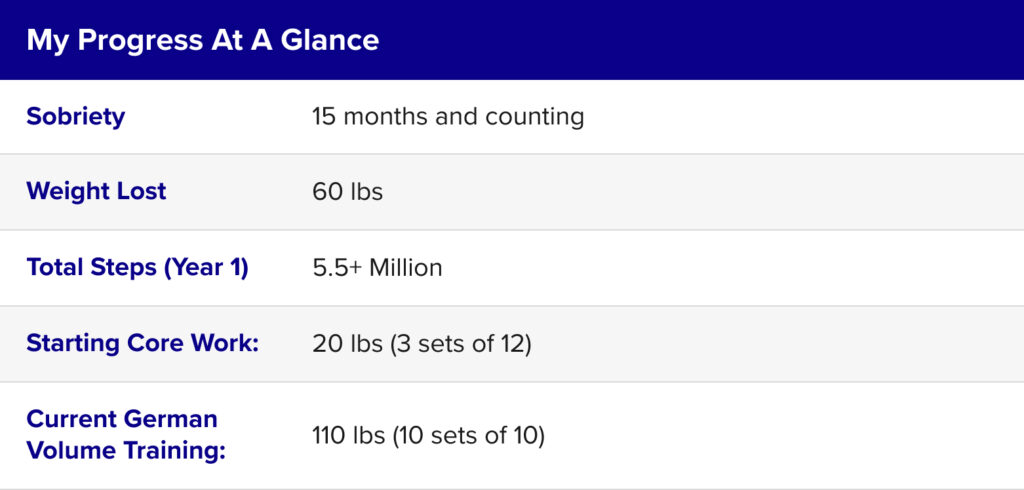
By month seven, I shifted into weight training. When I first touched the abdominal crunch machine, doing 20 pounds for three sets of 12 felt near impossible. Fast-forward past 140 consecutive days of lifting: I now run German Volume Training, pushing 110 pounds for 10 sets of 10 reps.
Finding the Right Support: Why Inno Supps Stuck
Back when I was drinking, I had ordered products from Inno Supps thinking they could magically outwork a bad lifestyle. Unsurprisingly, a supplement can’t fix self-destructive habits. But once I got sober and committed to daily training, the formulas did exactly what they were designed to do: amplify real effort.
A few staples became non-negotiable in my routine:
- Inno Cleanse: Constant bloating and digestive distress used to make me feel sluggish and heavy. Within four to five days of using Inno Cleanse, the bloat dropped noticeably. It wasn’t harsh like a laxative; it gently flushed out my system and reset my stomach.
- Inno Shred: When weight training got grueling, Inno Shred became my go-to for clean thermogenic energy and locked-in focus. It gives me that extra drive to fight through the final, shaking reps on heavy days—and helps keep the severe soreness at bay, even after leg day.
- Night Shred: Finding natural, restful sleep without relying on alcohol or heavy sedatives was one of my biggest hurdles early in recovery. Night Shred helped ease my nighttime routine and gave me deep, quality sleep so my body could actually repair itself.
Turning My Healing into a Mission
What started as quiet, head-down survival on a treadmill quickly turned into an unexpected career and purpose.
The gym community embraced me when I was still battling intense body dysmorphia. Friendly regulars began stopping by my machine to cheer me on. Soon after, I entered the Ms. Health and Fitness competition alongside 31,600 contestants across the US and Canada—and finished third in my division.
With encouragement from friends and support from my First Nations band’s education coordinator, I enrolled in the International Sports Sciences Association (ISSA) to become a certified fitness trainer and nutrition coach. Studying motivational psychology made everything click: the behavioral tools used in elite fitness training mirror the exact principles taught in addiction recovery centers.
Today, my schedule looks completely different than it did two years ago:
- Gym Employee & Trainer: I was hired right off the treadmill at my gym, and for 10 out of 11 months, I held the #1 spot on their Most Active board (logging 60 to 80 visits a month).
- Community Recovery Circles: Every other weekend, I travel back to my First Nations home community to host a recovery circle—creating a safe space for others fighting the same battles I faced.
- Leading by Example: I share the raw, unfiltered reality of recovery and fitness on social media. If sharing my journey helps even one person put down a drink or walk into the gym, every hard mile was worth it.
The Work Comes First
There are no shortcuts, magic powders, or overnight fixes. A clean diet, consistent supplements, and structured workouts only work when you show up and do the hard, uncomfortable work first.
If you are standing where I was 15 months ago—scared to look in the mirror, wondering if change is even possible—just lace up your shoes and take one single lap. You don’t have to overhaul your entire life today. You just have to choose the gym over the old habit, one decision at a time.